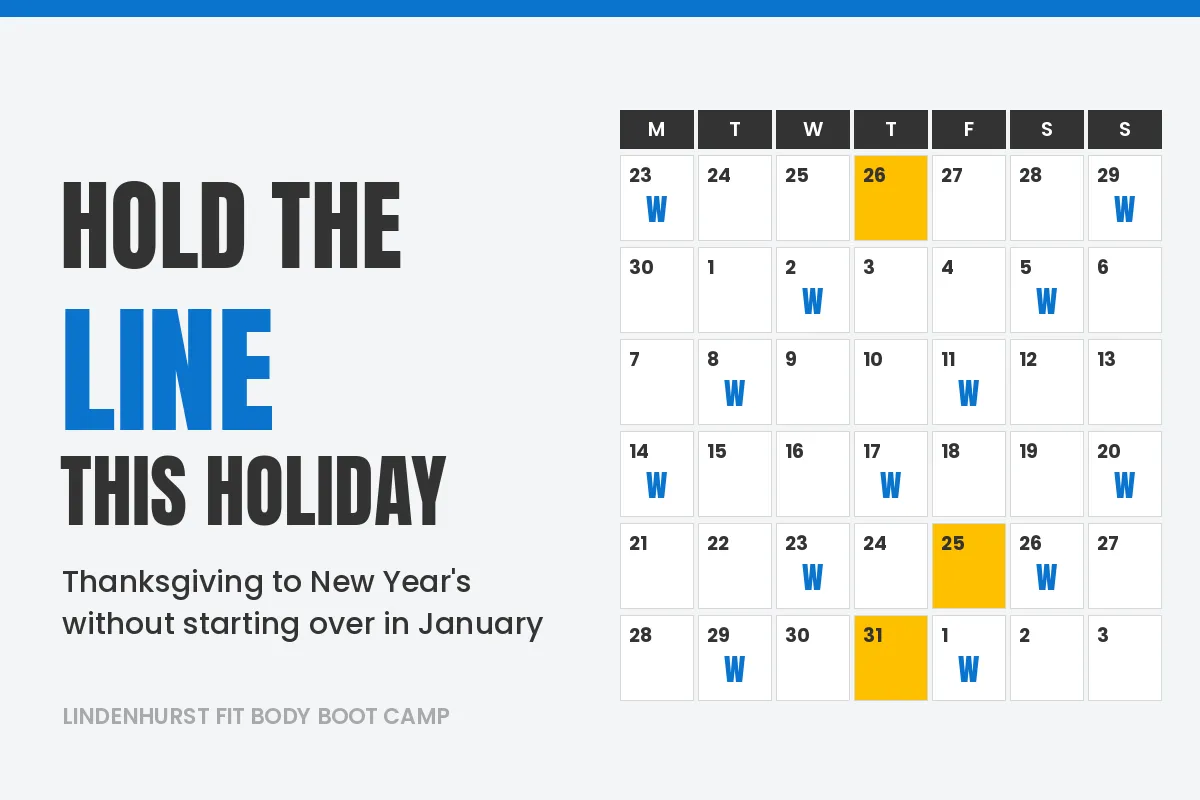
Why You Keep Losing the Same 10 Pounds (And How to Hold On Through the Holidays)
The Same 10 Pounds, Again
I hear it every year, usually right around January: "I'm trying to lose the same 10 pounds. Again."
Here's what that tells me. You already know how to lose those 10 pounds. You've done it before, maybe two or three times. You built the habits, got some momentum going, and saw the scale move.
Then a party happened. Or Thanksgiving. Or the whole stretch from Halloween candy to New Year's Eve. And somewhere in there, the habits stopped.
So the skill you're missing is keeping the weight off when life gets messy. That's a different skill from losing it, and almost nobody practices it on purpose. The holidays are the best chance you'll get all year to practice it.
How Much Weight People Actually Gain
You've probably heard that the average person gains 5 to 10 pounds over the holidays. That number gets repeated everywhere, and it's wrong.
When researchers at the National Institutes of Health actually weighed people before and after the holidays (published in the New England Journal of Medicine in 2000), the average gain from Thanksgiving to New Year's was a little under one pound. Later research lands in the same neighborhood: about one to two pounds.
One pound sounds like nothing. Here's the catch: most people never lose it. The same study found that pound was still there months later. Do that every year for ten years and you've got the "same 10 pounds" without ever having one terrible month.
The average also hides a bigger group. About one in seven people in that study gained five pounds or more, and people who were already carrying extra weight were more likely to land there.
What Actually Knocks You Off Track
The pie isn't what gets you. The decision you make the morning after the pie is.
Psychologists have a name for it. Researchers who study dieting call it the "what-the-hell effect." You go over your plan at one meal, decide the day is blown, and figure you might as well keep going. One slice turns into a weekend.
Then the calendar makes it worse. Research on what's called the "fresh start effect" shows people love to restart goals on landmark dates: a Monday, a birthday, January 1st. So the thinking goes like this:
Thanksgiving: "I overdid it. I'll get back on track Monday."
Mid-December: "Too many parties left. No point starting now."
Christmas week: "I'll start fresh in January."
That's six to eight weeks with no workouts and no plan, all because of one meal in November. That's how a one-pound holiday turns into starting over from scratch.
The Good News: One Slip Doesn't Undo Your Work
A bad meal, a missed workout, even a rough week won't wipe out what you've built. The research backs this up.
Your habits are tougher than you think. In a well-known study out of University College London, building a new habit took an average of 66 days. Missing a single day along the way made no real difference. What breaks a habit is weeks of not doing it, until going to the gym stops feeling like part of your week.
Your fitness holds longer than you think. Strength and muscle stay mostly intact for two to three weeks with no training at all. Your cardio starts to slip a bit sooner. And research shows that even cutting your training way down, as little as one solid session a week for some people, can hold onto most of your strength for months. Two sessions a week through December means January is a continuation, not a restart.
People who keep weight off eat the same way on holidays. The National Weight Control Registry follows thousands of people who lost weight and kept it off. One analysis found that the ones who ate about the same on weekdays, weekends, and holidays were about one and a half times more likely to keep their weight steady over the next year. They weren't perfect on the holidays. They just didn't swing between "all in" and "all out."
Your Holiday Game Plan
The goal from now through New Year's is to hold onto what you've built. Losing more is a bonus. Holding steady is the win.
1. Set your floor
Most plans only have one setting: perfect. You need a second one for crazy weeks. Your floor is the bare minimum you'll do no matter what's on the calendar. For example:
Two workouts a week, even when the schedule is packed
Protein at every meal (the hand portion guide makes this easy to eyeball, no scale needed)
Water before you get to the party
A real bedtime most nights
Hit your floor and the week counts. On the busiest days, a protein shake like Level-1 beats skipping the meal or grabbing whatever's in the break room.
2. Use the next-meal rule
Overdid it at the party? Your next meal is a normal meal. You don't wait for Monday, and you don't wait for January. You also don't skip meals or do two-a-days to "make up for it," because that's the same all-or-nothing thinking in reverse.
3. Plan for your danger days
You already know when they are. The Friday office party. Thanksgiving weekend. The week between Christmas and New Year's when every routine falls apart. Put your workouts on the calendar for those weeks now, before the invitations start filling them up.
Write Your Plan Before Thanksgiving
A plan in your head turns into "I'll figure it out" by the second party. Take five minutes this week and write down your answers:
What's my floor? (How many workouts a week, and which days?)
Which days on my calendar are going to be the hardest?
When I slip, what's my next move? (Hint: the next meal.)
Who's going to notice if I stop showing up?
That last one matters more than people think. Tell your coach. Tell your workout buddy. Tell the person who stands next to you in class. When someone expects to see you on the Monday after Thanksgiving, "I'll start in January" gets a lot harder to say.
This Year, Keep It
You've already done the hard part. You built the habits, you showed up, and you know what works for you. This December, the job is to hang onto it.
You'll probably have a few meals you didn't plan on. That's fine. Get back to your floor at the next meal and keep coming in. Walk into January a few steps ahead instead of back at the start line, and you'll finally be done with that same 10 pounds.
Want more tips like this delivered straight to your inbox? Join our newsletter here.
See you in class,
Mike
