Stop Counting, Start Measuring: The Hand Portion Method We Use With Every New MemberBlog Post
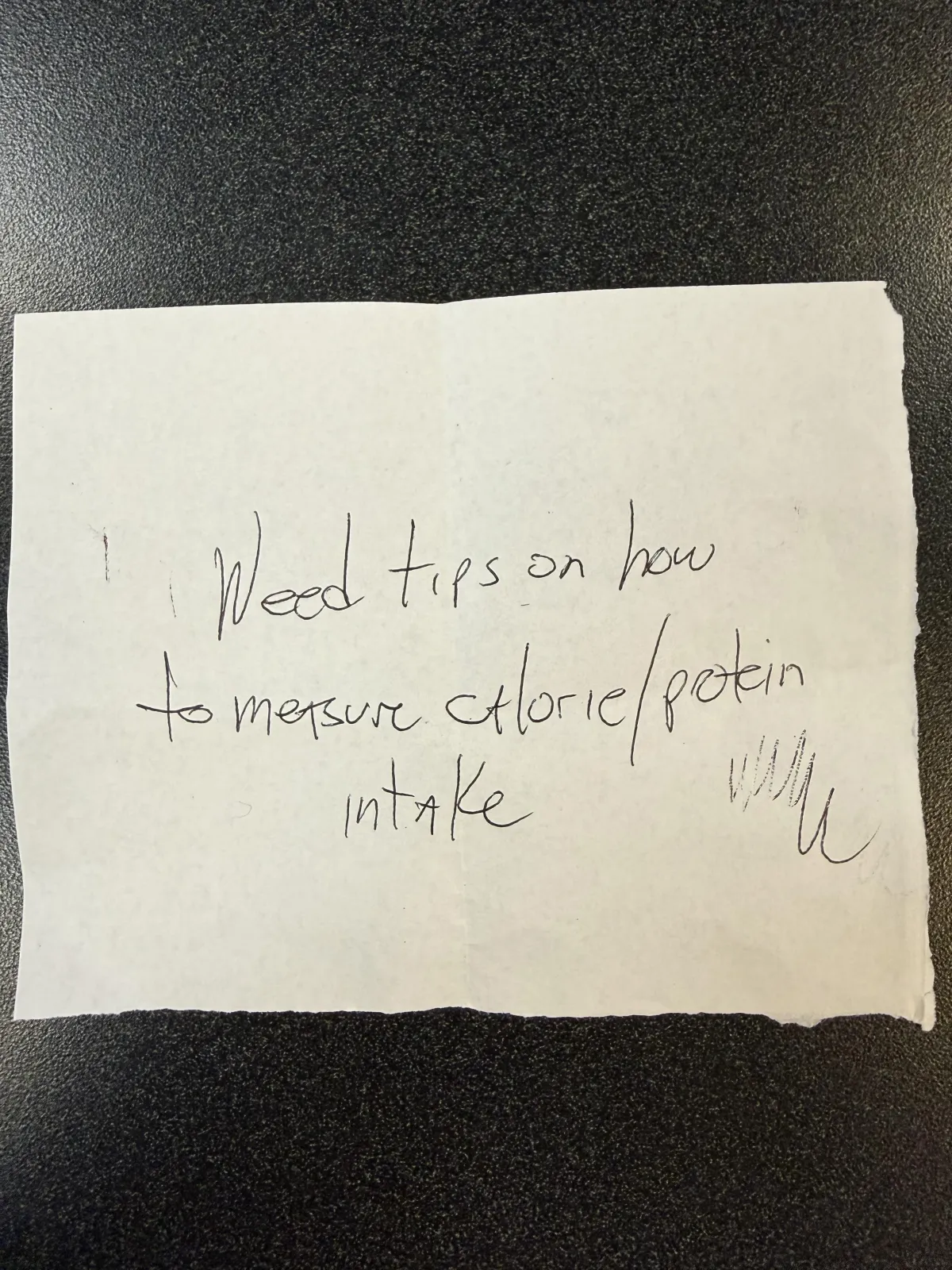
I get some version of this question almost every week: "Mike, do I need to weigh my food?"
No. You don't.
What you need is a way to be consistent without turning every meal into a math problem. That's why the first thing we teach every new member at LFBBC — before we talk macros, before we talk calories, before we talk anything complicated — is the hand portion method.
The Hand Guide, Explained
You already carry your measuring tools with you everywhere. They're attached to your wrists.
Protein = 1 palm (thickness and diameter of your palm, not counting fingers)
Vegetables = 1 fist
Carbs = 1 cupped hand
Fats = 1 thumb
That's it. No scale, no app, no guessing games at a restaurant or your kid's birthday party. Your hand scales with your body size, which is a big part of why this works as well as it does — a bigger frame naturally needs a bigger portion, and a bigger hand gives you exactly that.
Where We Start You
Here's the part people don't expect: men and women don't start in the same place.
Women traditionally start with one serving of each (1 palm protein, 1 fist veggies, 1 cupped hand carbs, 1 thumb fat) at every meal.
Men traditionally start with two servings of each at every meal.
This isn't arbitrary. It reflects real differences in average body size, muscle mass, and total energy needs. It's a starting point, not a life sentence — some of you will need to adjust up, some down, depending on your goals and how your body responds. That's exactly the kind of thing we dial in during your Nutrition and Goal Meeting (more on that below).
Why This Isn't Just a Gym Gimmick
I'm not asking you to trust me blindly on this. The hand method lines up with what serious muscle and metabolic health researchers are actually telling us about protein.
[Likely] Dr. Layne Norton, a nutritional scientist who has spent years researching muscle protein synthesis (MPS), has pointed to roughly 2–3 grams of leucine — the specific amino acid that flips the "on" switch for muscle building — as the threshold your body needs per meal to trigger that response. In practical terms, that lines up with somewhere around 30-plus grams of quality protein at a sitting, which is right in the range of what a palm-sized portion tends to deliver. Norton has also emphasized that hitting your protein at most meals across the day matters more than obsessing over exact timing — you can't "bank" protein from a low meal by overeating protein later, because the body doesn't store amino acids the way it stores fat.
[Likely] Dr. Gabrielle Lyon, founder of the muscle-centric medicine approach, teaches something similar from a different angle: she recommends designing each meal around a minimum of roughly 30 grams of high-quality protein, specifically to hit that same leucine threshold and stimulate muscle protein synthesis. Her broader point — the one I want you to actually take home — is that skeletal muscle isn't just about how you look. It's one of your biggest levers for long-term metabolic health, blood sugar regulation, and healthy aging. Treating your protein at every meal like it matters is a muscle-centric habit, not a bodybuilder habit.
Neither of them built their careers around a hand. But the why behind the hand — hit a real protein target per meal, don't skip it, don't try to make it up later — is straight out of their research.
For Those of You Who Track Macros
The hand guide is the on-ramp. Some of you are going to want the exact numbers, and that's fine — here's how we build those out once you're ready to graduate from "1 palm, 1 fist" to hitting specific gram targets.
Start with protein, set by your goal weight — not your current weight.
Baseline: 1 gram of protein per pound of goal bodyweight, for most people, most of the time.
Performance and muscle-building focus: 1.5 grams per pound of goal bodyweight. If your main objective is building muscle or improving performance rather than general health maintenance, this higher end is where we typically set you.
[Likely] This lines up with the practical, simplified version of the protein research Dr. Layne Norton has spent years on. Norton's own published numbers are actually based on lean body mass rather than total bodyweight — he's cited recommending roughly 2 to 2.4 grams per kilogram of lean mass in a muscle-gain phase, and 2.4 to 3 grams per kilogram of lean mass when cutting for fat loss. In plain English: the leaner and more muscular you are, the more protein your body can put to use, and the higher end of that range is reserved for people actively trying to build or preserve serious muscle, not just "eat healthy." The 1g and 1.5g per pound of goal weight targets above are the simplified, everyday version of that same principle — easy to calculate without needing a body composition scan.
Once protein is locked in, here's how to fill out the rest of your calories.
[Likely] Norton's own approach, once total calories and protein are set, is refreshingly simple: fat and carbs matter far less than people think, as long as protein and total calories are dialed in. His general framework:
Set your calories first, based on your goal (fat loss, muscle gain, or maintenance).
Lock in your protein target using the numbers above.
Set a fat floor — don't go lower than roughly 0.3 grams of fat per kilogram of bodyweight per day. Dietary fat supports hormone production, and going too low for too long isn't worth whatever calories you're saving.
Fill the rest with carbs. Whatever calories remain after protein and your fat floor are accounted for — that's your carb budget. Carbs fuel your training and daily energy, and there's no research-backed reason to fear them once protein and fat are already covered.
The exact split between fat and carbs beyond that floor comes down to personal preference and how you feel training and recovering — not a magic ratio. Some people feel and perform better with more carbs and less fat; others feel better with more fat and slightly fewer carbs. That's part of what we dial in together.
This is exactly the kind of individualized math we walk through, line by line, in your Nutrition and Goal Meeting — using your real goal weight, your real activity level, and your real training focus instead of a generic calculator.
Schedule your Nutrition and Goal Meeting here.
What the Hand Guide Won't Tell You
It's a starting point, not a finish line. It doesn't know your goals, your current body composition, whether you're trying to lose fat, build muscle, or both at once, or whether "1 serving" or "2 servings" is actually right for your body. It's deliberately simple so you can start today without waiting for a perfect plan.
But if you want the perfect plan — the one built around your actual goals, your actual body, and your actual life — that's what our Nutrition and Goal Meeting is for. We sit down, look at where you are, where you want to go, and build out portions, timing, and targets that are specific to you instead of a general starting point.
Schedule your Nutrition and Goal Meeting here.
Your Next Step
Start with the hand guide at your next meal. Women: 1 of each. Men: 2 of each.
Don't overthink it. Consistency beats precision when you're starting out.
Book your Nutrition and Goal Meeting so we can personalize this for you specifically.
New to LFBBC? Book a No Sweat Intro and let's talk through your goals in person.
Want more of this kind of content in your inbox? Sign up for our newsletter.
— Mike
