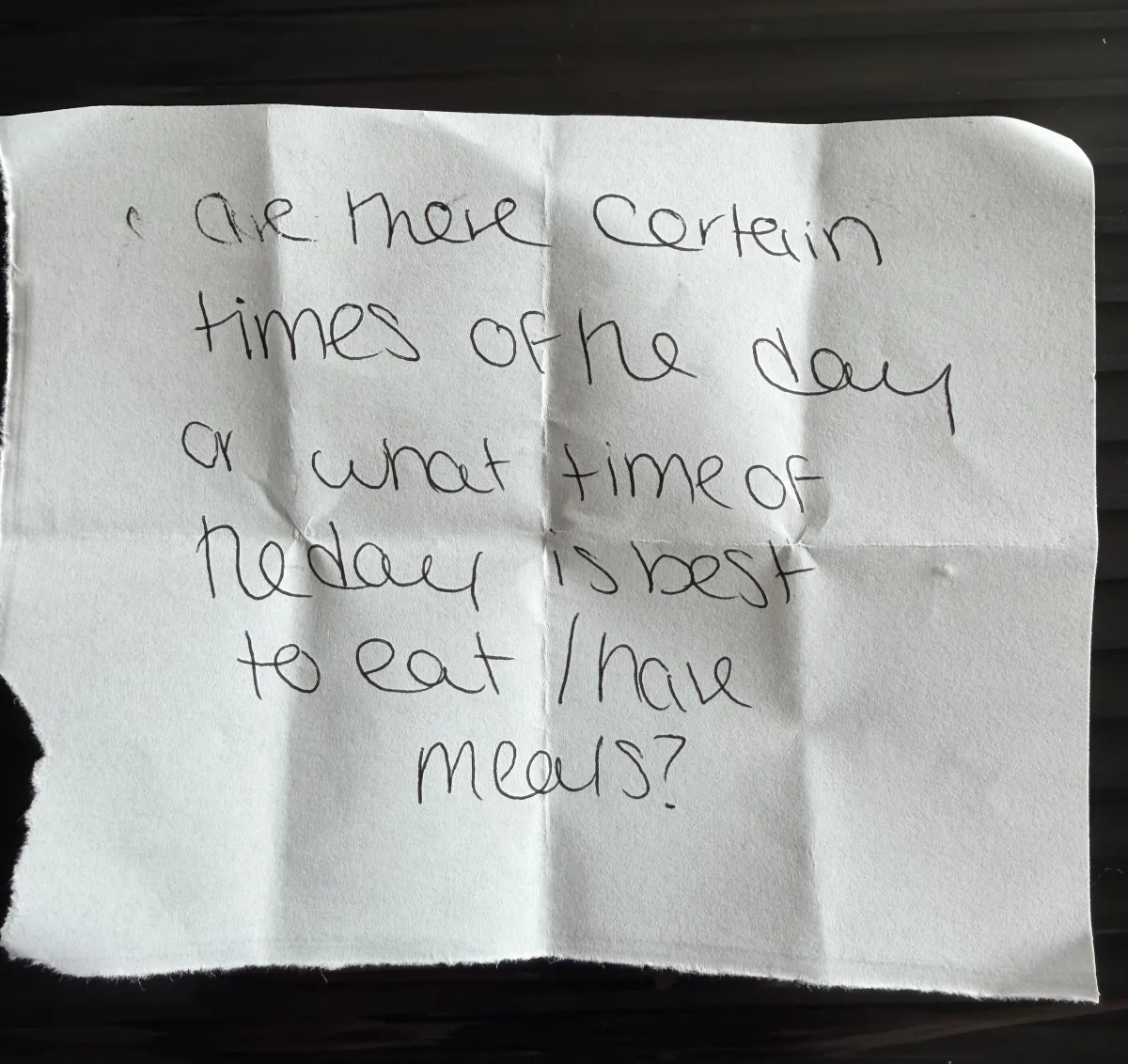
Is There a Best Time to Eat? Here's What Actually Matters
I get some version of this question every week: "Coach, is it bad to eat late at night? Should I be eating first thing in the morning? Does it matter when I get my meals in?"
Here's the honest answer: if fat loss is your only goal, there's truly no bad time to eat. Your body doesn't have a clock that decides whether calories "count." A calorie deficit is a calorie deficit whether you hit it with three meals or six, breakfast at 6am or noon.
But if you're also trying to hold on to muscle — which you should be, because muscle is what gives your body shape and keeps you strong as you age — then timing isn't completely off the table. Here's where it actually matters.
Your first meal carries more weight than you think
Research on muscle protein synthesis (the process your body uses to build and maintain muscle) points to something specific: your body comes out of an overnight fast in a state where it's especially responsive to protein. Getting a solid protein hit at that first meal helps protect the muscle you've worked to build, particularly during a fat loss phase when your body is more prone to breaking down muscle for fuel.
This matters more the older you get. If you're in your 20s and already hitting your daily protein target, a lighter breakfast isn't going to hurt you much. But if you're 45, 50, 55+ and trying to stay strong for the long haul, that first meal protein isn't optional — it's one of the easiest, highest-leverage things you can control.
It's not just about breakfast — it's about the gaps
Here's the piece most people miss: this isn't only a "get your protein at breakfast" rule. It's a "don't let too much time pass without protein" rule. The research suggests your body can only stay in a muscle-building, muscle-protecting state for so long before it needs another dose — somewhere in the 4-to-6-hour range. Go longer than that consistently, and you start working against the muscle-retention side of your results, even if your total daily protein number looks fine on paper.
So the guy who nails a 40-gram protein breakfast and then doesn't eat again until dinner eight hours later? He's still leaving something on the table. It's not the first meal alone — it's making sure you're not going long stretches empty.
The bottom line
For fat loss: timing genuinely doesn't matter. Total calories and total protein win.
For holding on to muscle: prioritize protein at your first meal, especially as you get older, and don't let more than 5-6 hours go by without another protein-containing meal.
You don't need to overhaul your schedule. You need a solid first meal and no long gaps. That's it.
If mornings are chaotic and a full meal isn't realistic, a quick protein shake closes the gap just as well — I keep Phormula-1 or a Level-1 bar on hand for exactly this reason.
If you want help figuring out where your own eating windows and protein targets should land, that's exactly what we cover in a Nutrition & Goals Meeting — let's sit down and build a plan around your actual schedule.
— Mike
